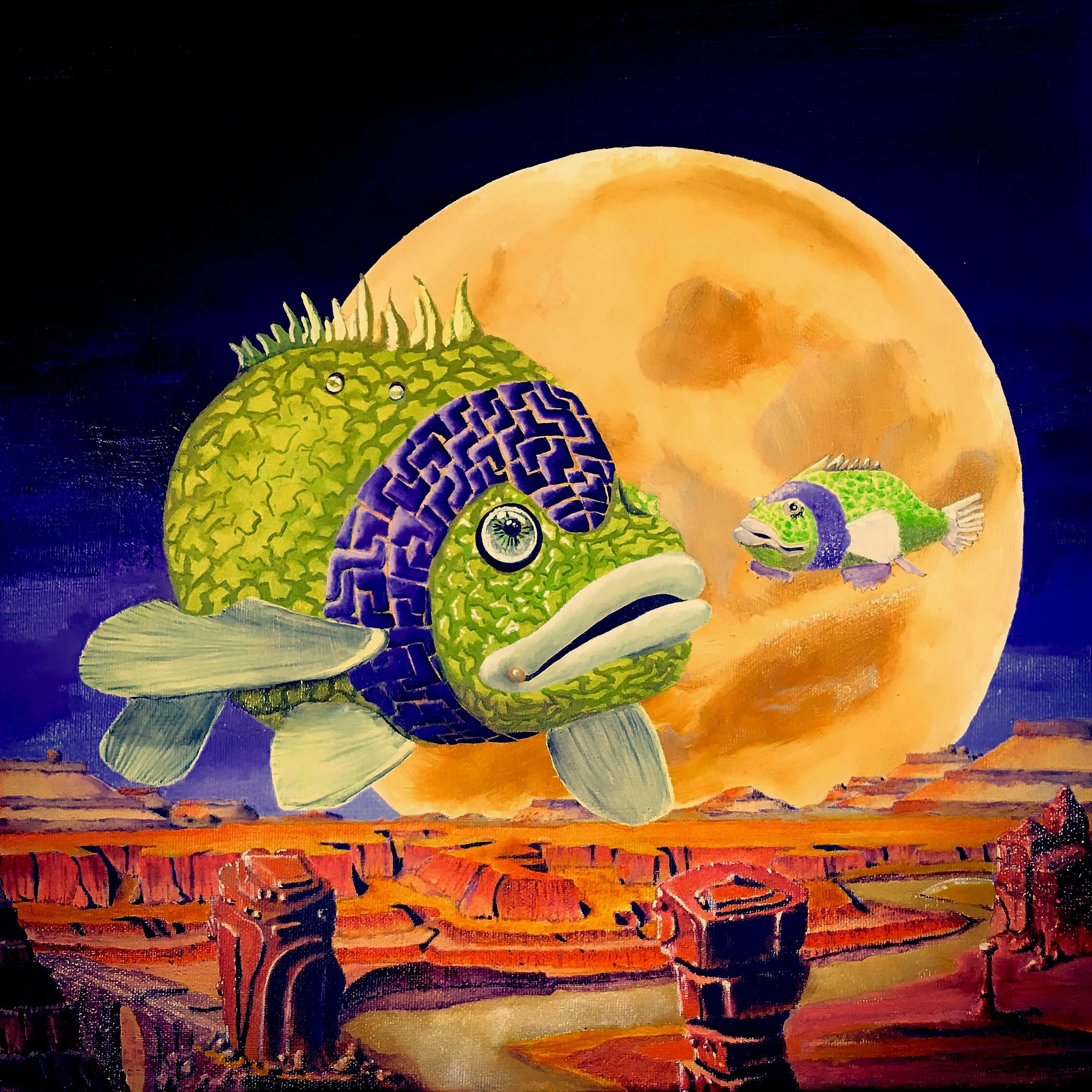
Oil
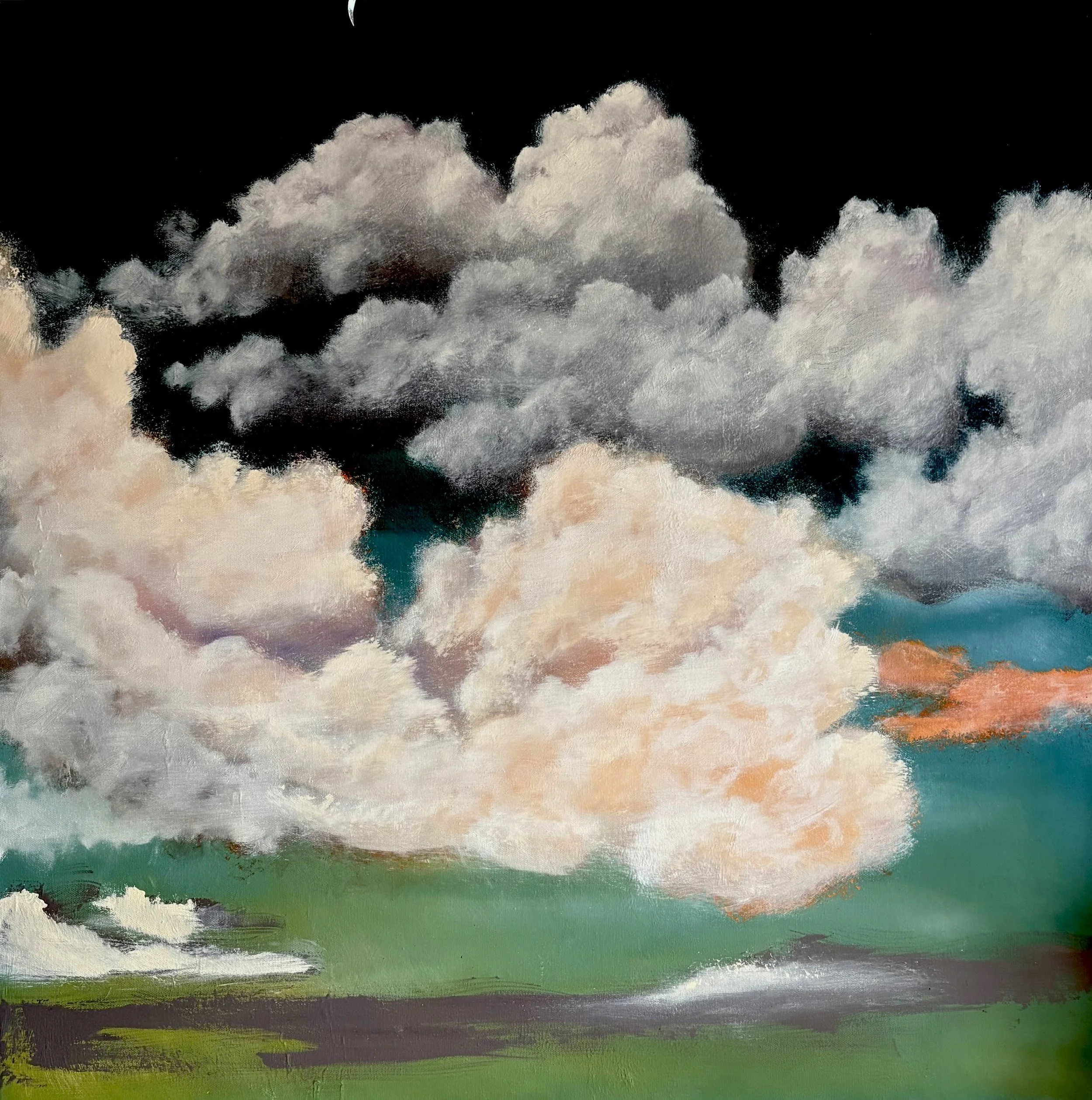
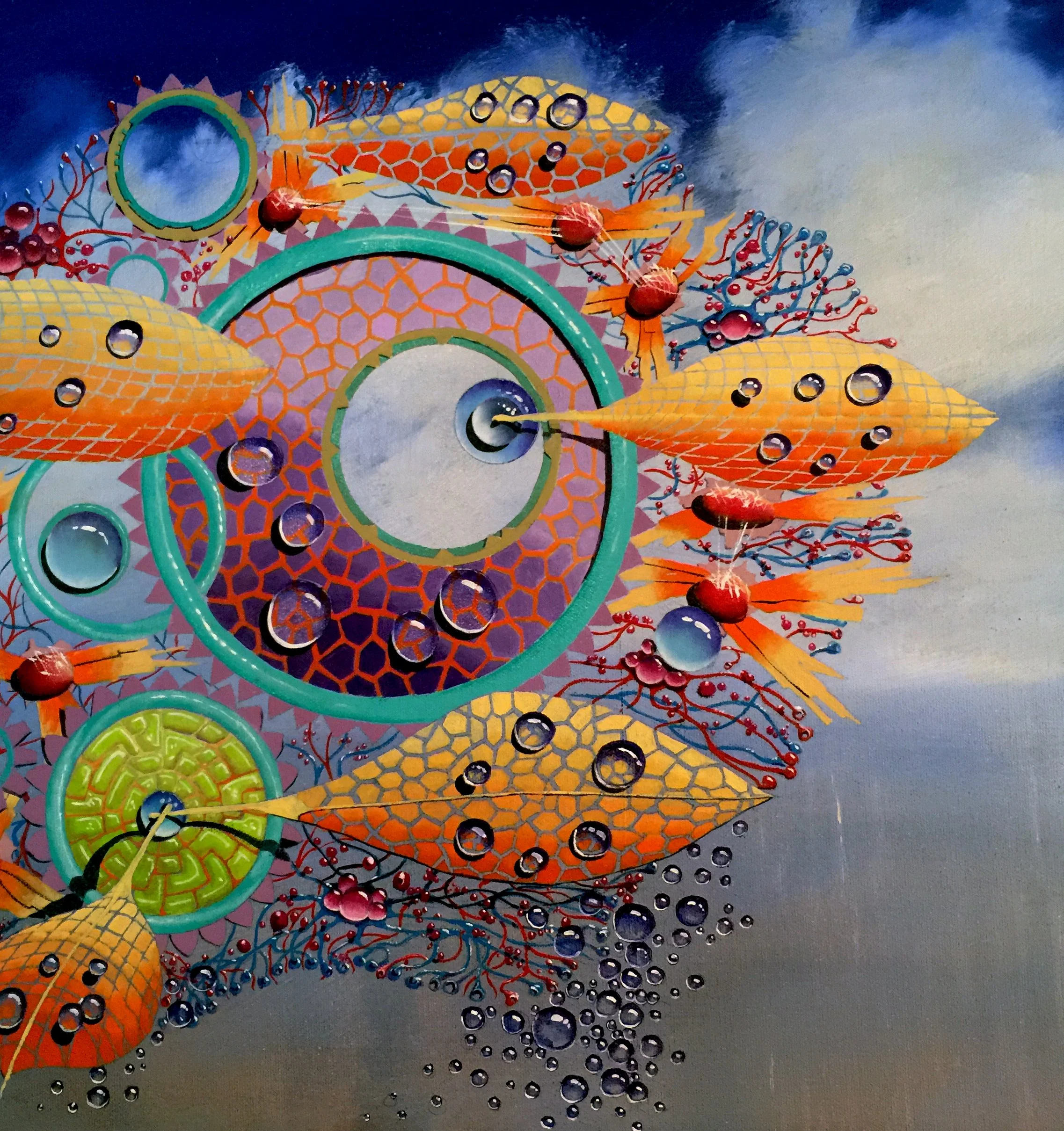
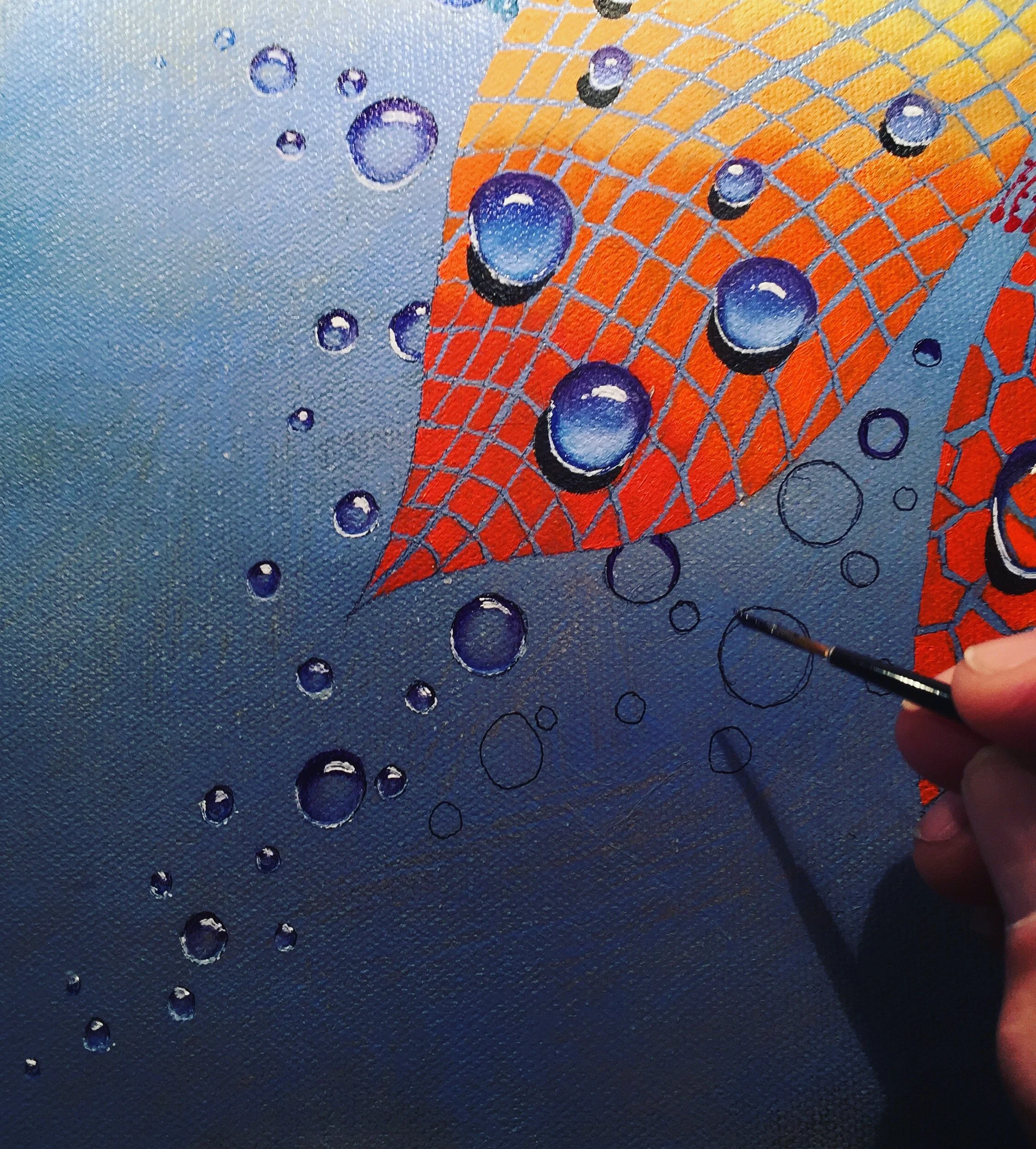
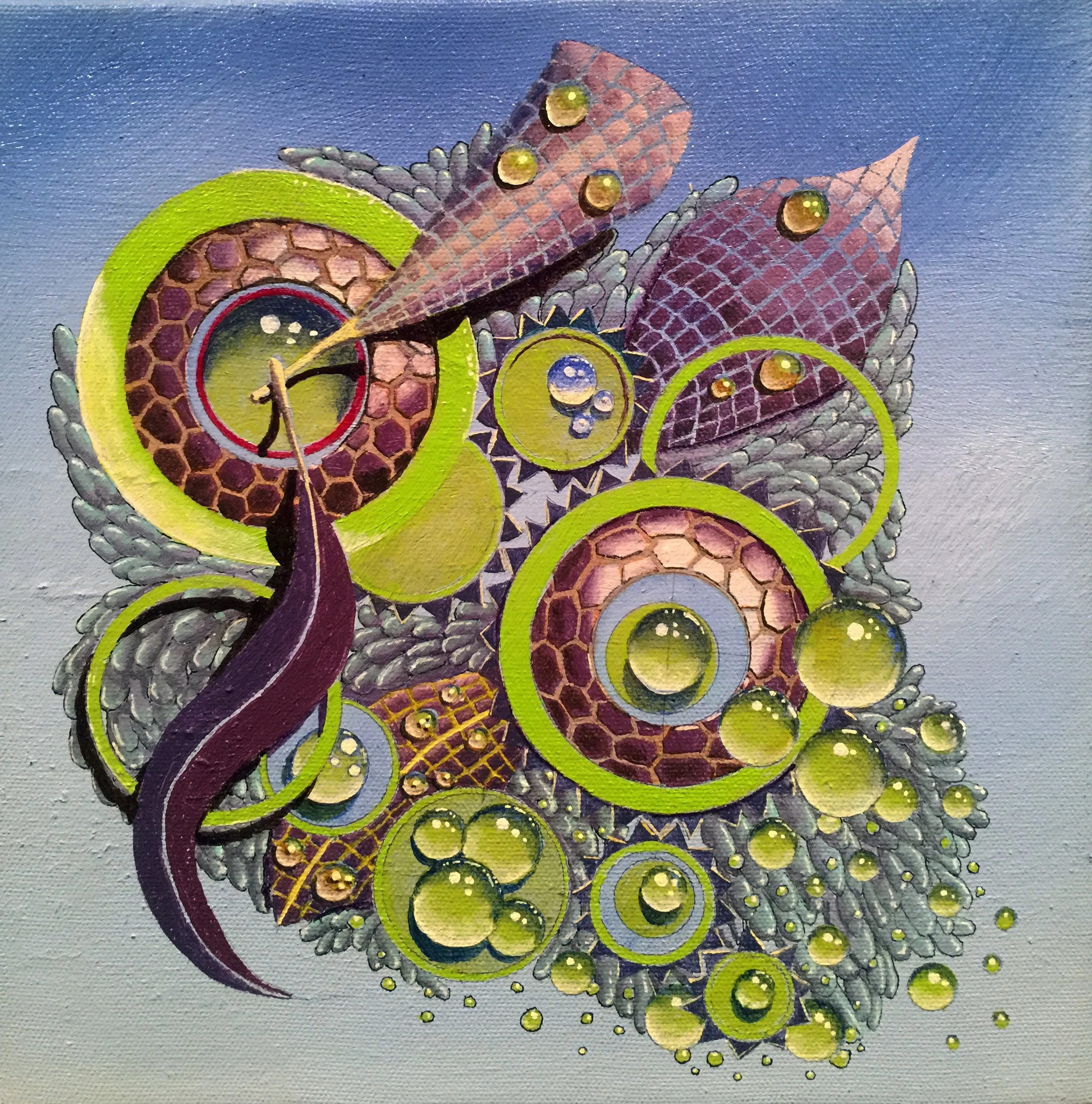
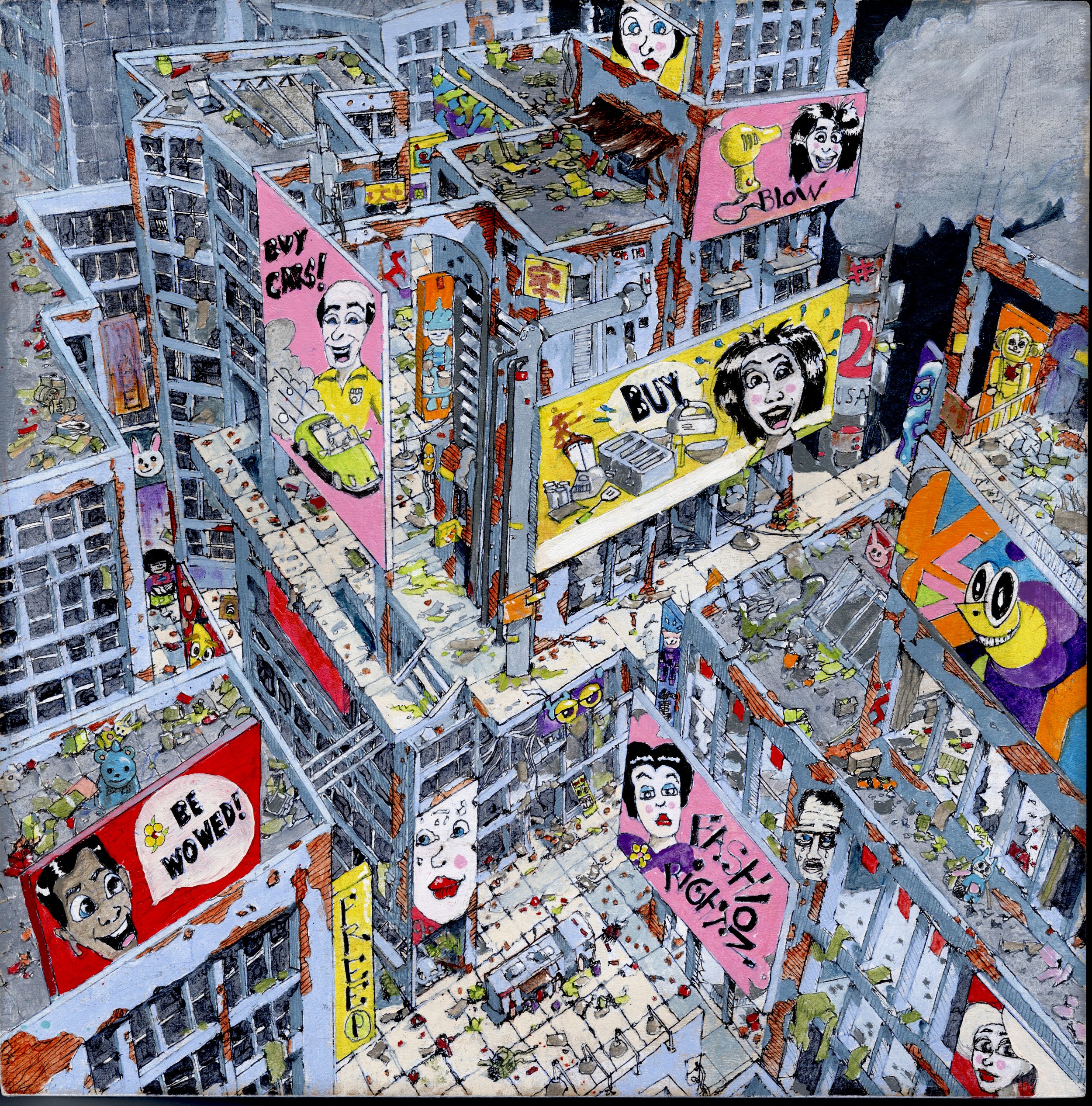
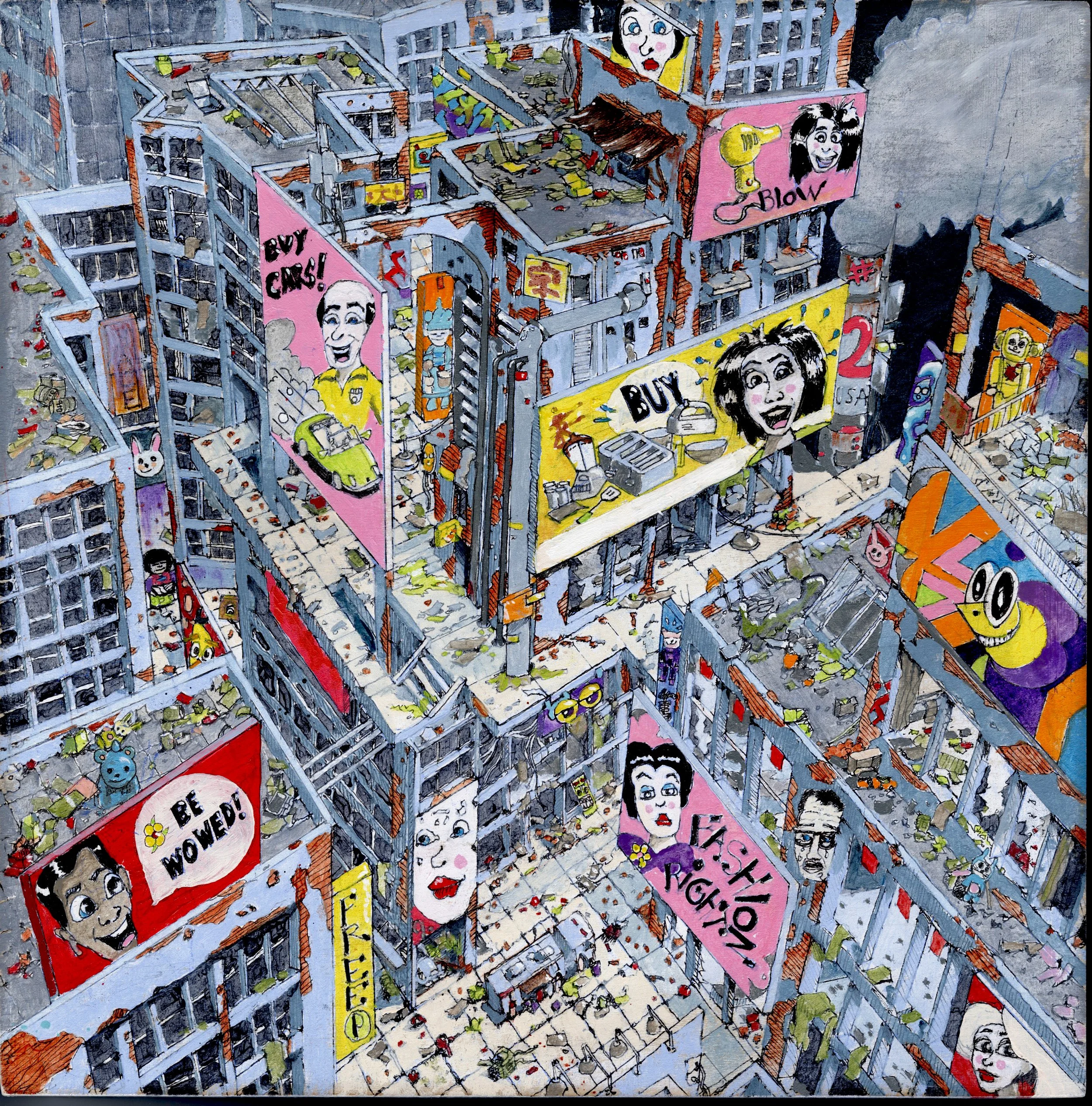
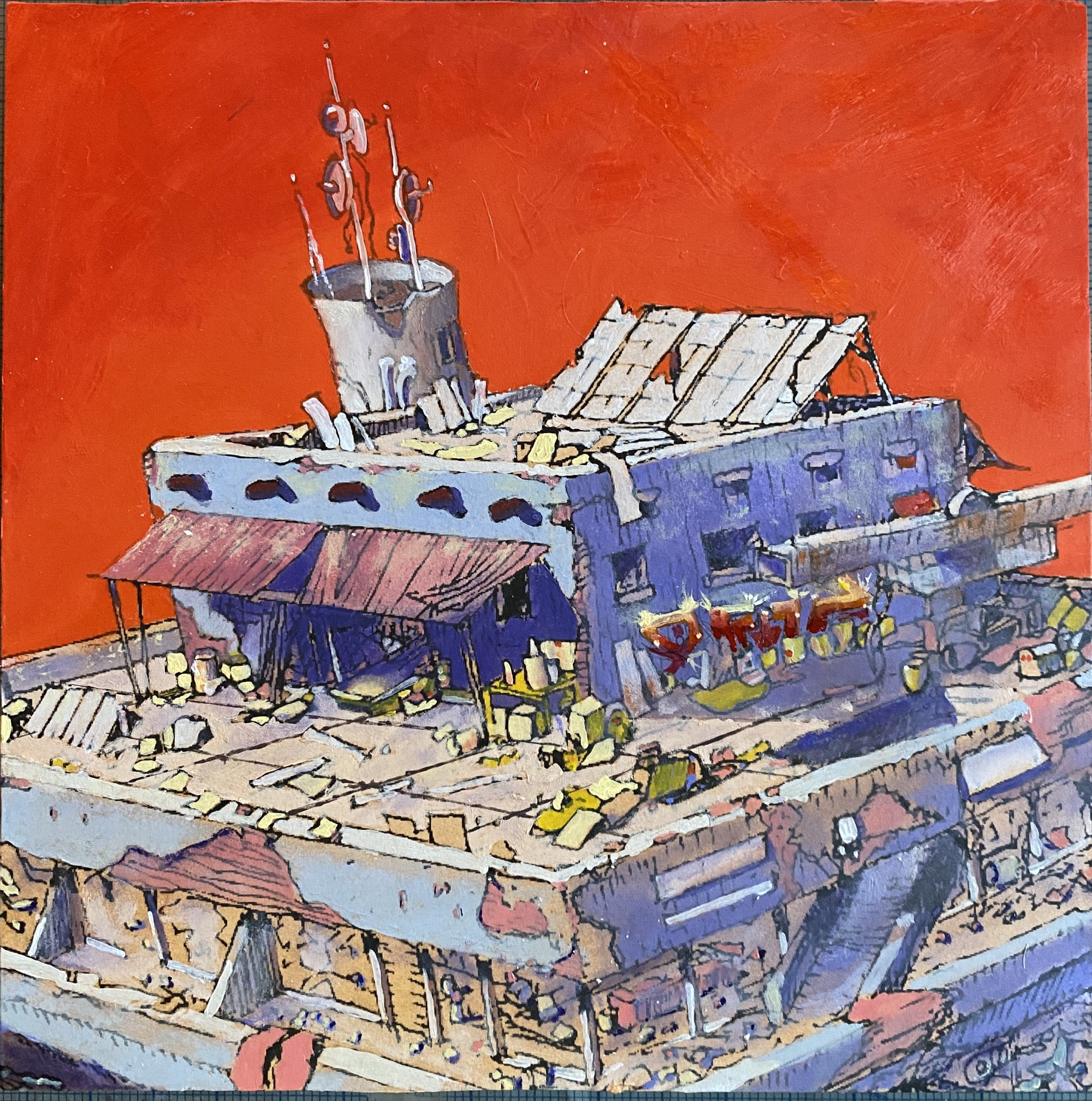
While oil painting occupies a greater part of my portfolio I am refocusing my attention on the World After Us, a project of the last decade or more. The initial inspiration was based on a book by Alan Weisman titled The World Without Us where one day humans suddenly disapeared. I am now focused on the Anthropocene Aesthetic and the remnaats of humanity - what we leave behind after human extinction. It’s more about “how” we drove ourselves to extinction rather than “what” we left behind to fester and rot. And, the work focuses on the remnants of denial. This is the sixth suite of The World After Us.
SEEING THROUGH THE MINDS EYE
THE CREATIVE MIND
“If you believe human wants and needs are infinite,” said Andreesen, “then there are infinite industries to be created, infinite businesses to be started and infinite jobs to be done, and the only limiting factor is human imagination. The world is flattening and rising at the same time.”
“The World is Flat, “America and Free Trade”, page 231 Thomas Friedman, 2005
The creative mind is a restless thing, always searching or wondering through the labyrinth of a mental entourage of places and objects that may hold the promise of the next great idea. Human brain capcacity to store and use information exceeds what neuroscientists estimate is enough space to continuously record over 3 million hours of television shows taking more than 300 years straight to fill the space.
Someone once said, “there are no new ideas, just a continuum of recombined and repackaged past ideas, or variations on a theme.” Where do new ideas come from? How can new ideas be found? How can the creative mind tap the vastness of the human brain to unlock and access the seemingly unlimited capacity and capability of an exploitable resource that we are all born with? Or are we all born with a creative mind?
In 1969 I stood before my third grade class and shared a vision for a small world I was creating on the wooded banks of a stagnant slew near Eugene, Oregon. My “show and tell” was all tell and realistically there was no show involved. But in my mind the world that I was creating with my friends was very real. While the tree house and other tree top platforms were in place, an entire master plan of bridges, paths vehicles and buildings were so vivid in my mind they had become my reality. Looking back, my teacher, while working with limited tangible information, was patient and allowed me to go on with my vision to an unbelieving classroom. However, I had invited enough of my classmates to the “fort” that I was able to preserve any credibility I had especially considering that I was nine years old. I can only imagine little Roald Dahl, Salvador Dali or Raymond Lowey describing weekend or summer activities to Monday morning classmates.
Robert Kostka, a protégé of Moholy Nagy, Josef Albers and Peter Selz of the New Bauhaus school of design in Chicago said, “we spend our entire childhood desperately trying to become adults and the rest of our lives trying to get back to our childhood.” His point was that by having the freedom of childhood thought enables unencumbered creative thinking. It is the simple ability to play that unlocks the endless possibilities of problem solving. Unlike mathematics, there can be endless answers to design problems. Finding a solution is much less important than finding the best solution to any design problem. Having the mental freedom to explore and play with possibilities can produce extraordinary results.
“When I asked Bill Gates about the supposed American education advantage – an education that stresses creativity, note rote learning – he was utterly dismissive. In his view, those who think that the more rote learning systems of China and Japan cant’t turn out innovations who can compete with Americans are sadly mistaken. Said Gates, “I have never met a guy who dosen’t know how to multiply who created software… Who has the most creative video games in the world? Japan! I never met these rote people’ … Some of my best software developers are Japanese.”
“The World is Flat, “Dirty Little Secret #2: The Ambition Gap”, page 264, Thomas Friedman, 2005
Today, there is an unavoidable trap that many designers fall into. The trap of not designing but applying standards, standard details, standard systems, standard materials and standard everything leads to mediocrety. Rarely does film, architecture, engineering, industrial design, graphic arts (clip art) fashion, planning, urban design and medical stuff produced from standards lead to the advancement of technology or the advancement of thought. Space exploration probably led to the greatest thinking and innovation since the industrial revolution maybe even since the Roman arch.
There is a fine line between innovation and creative design and free thinking where deadlines and clearly defined problems or needs are less important than creating a specific solution to a specific self defined problem.
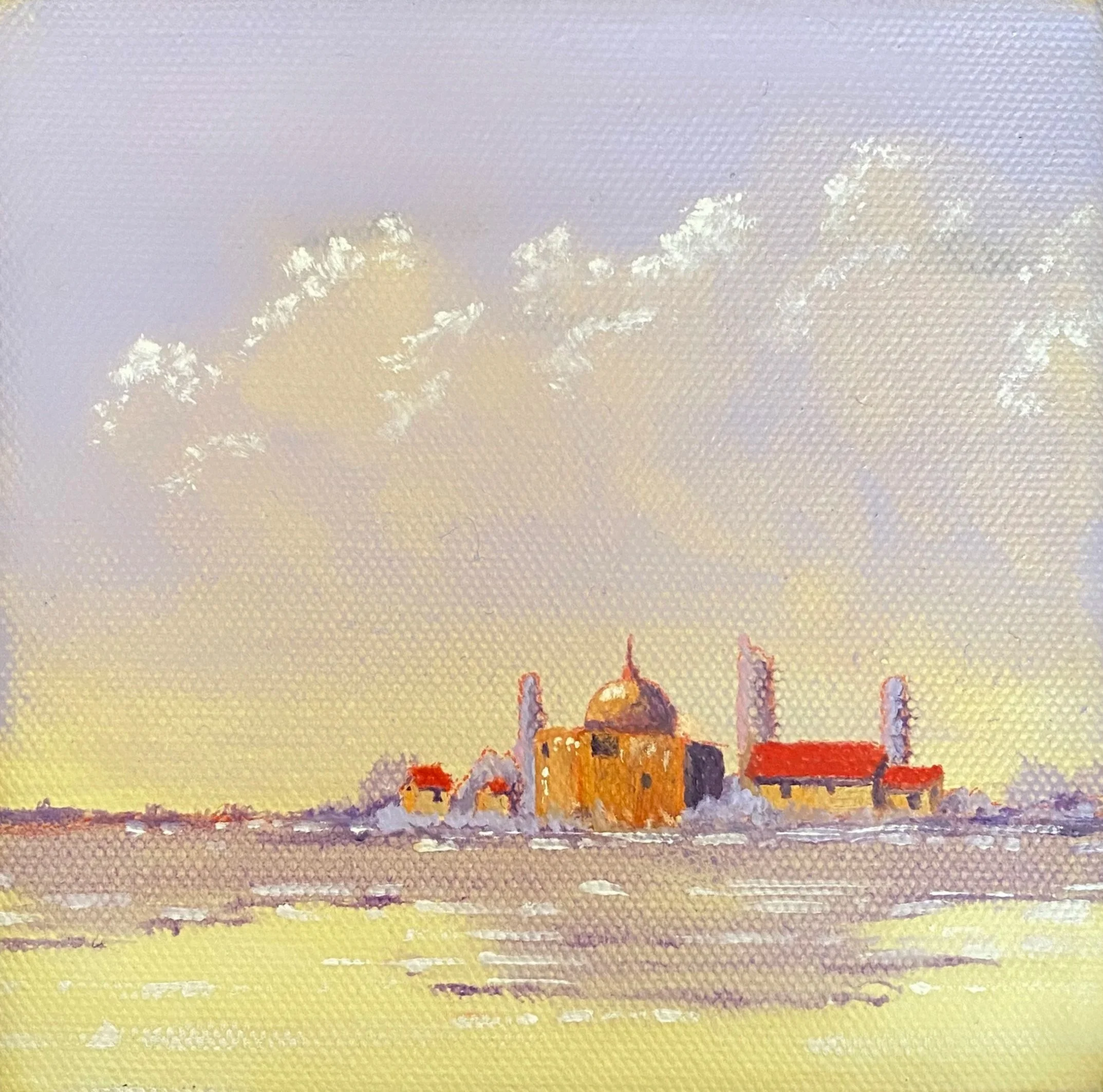
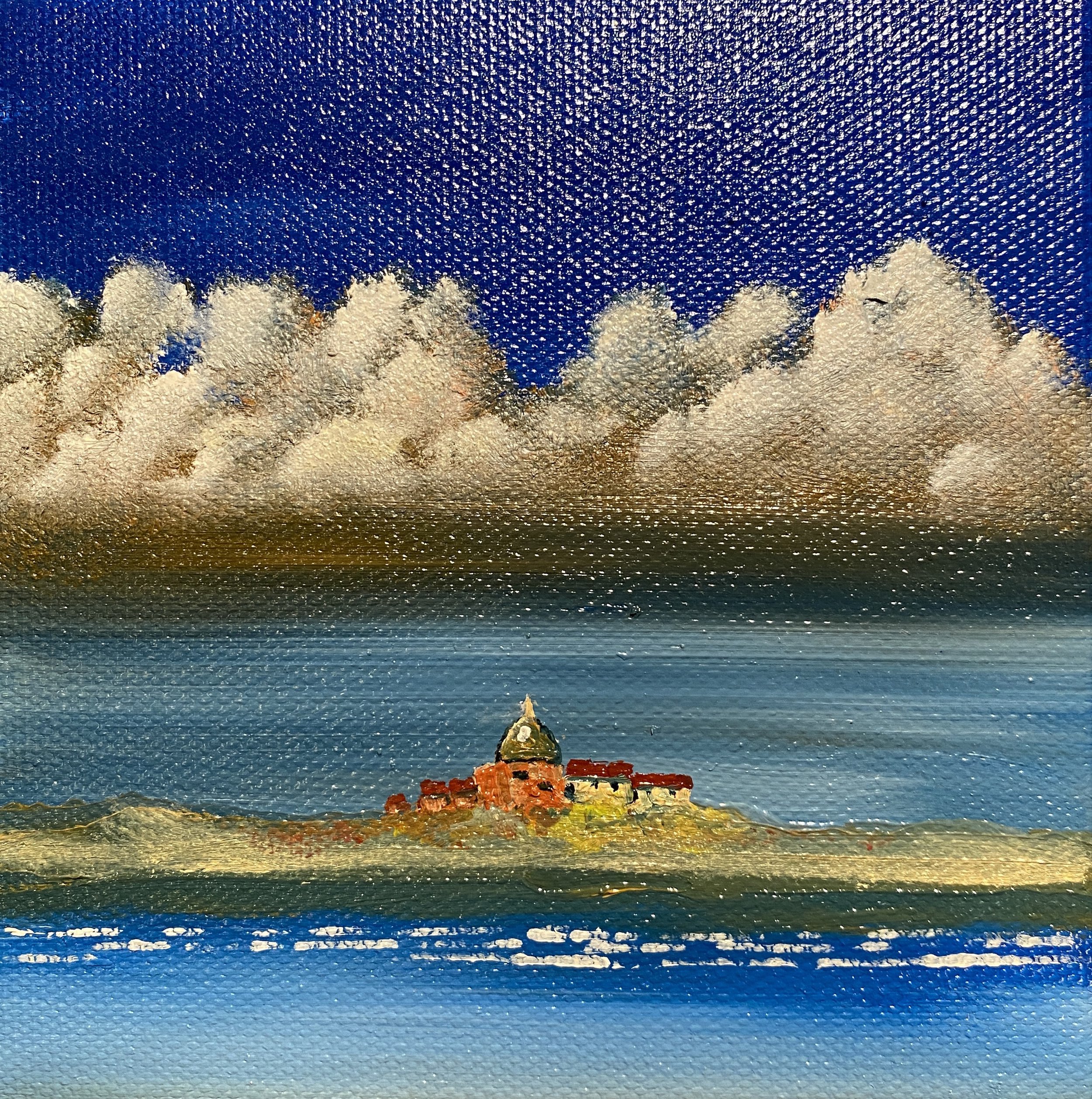
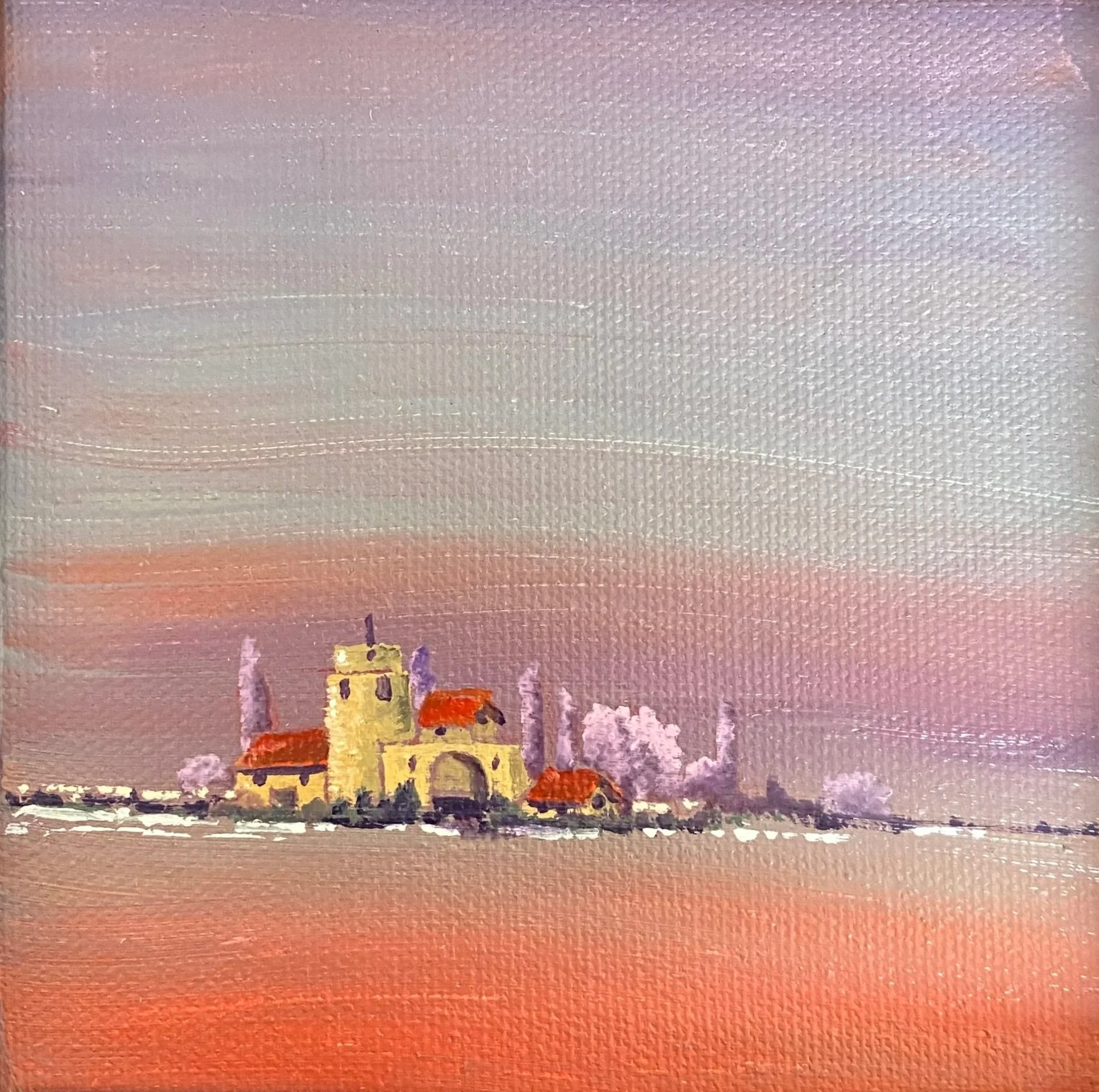
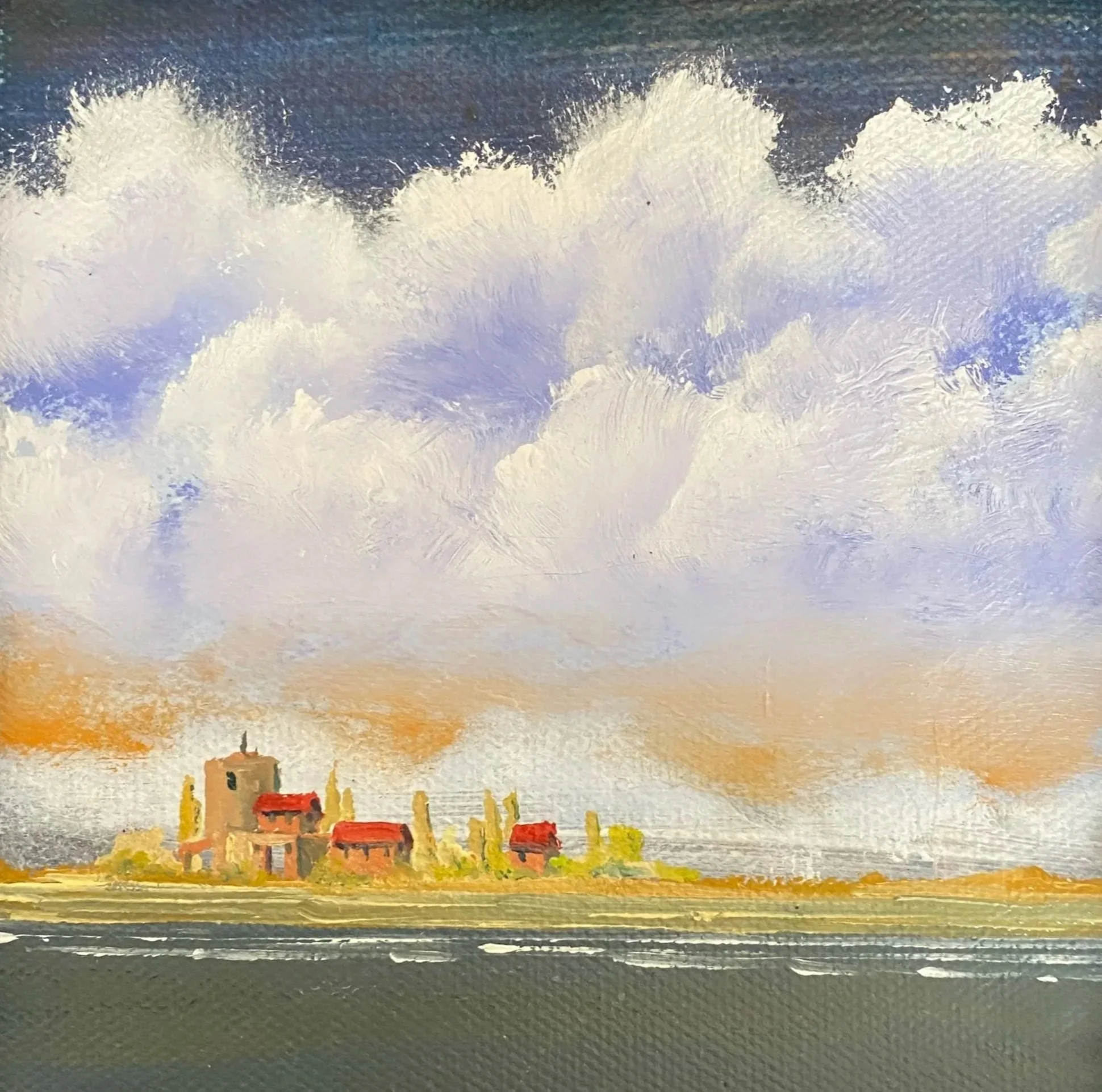
Some images you are about to see are real places, while others are not.
CITADEL CULTURE
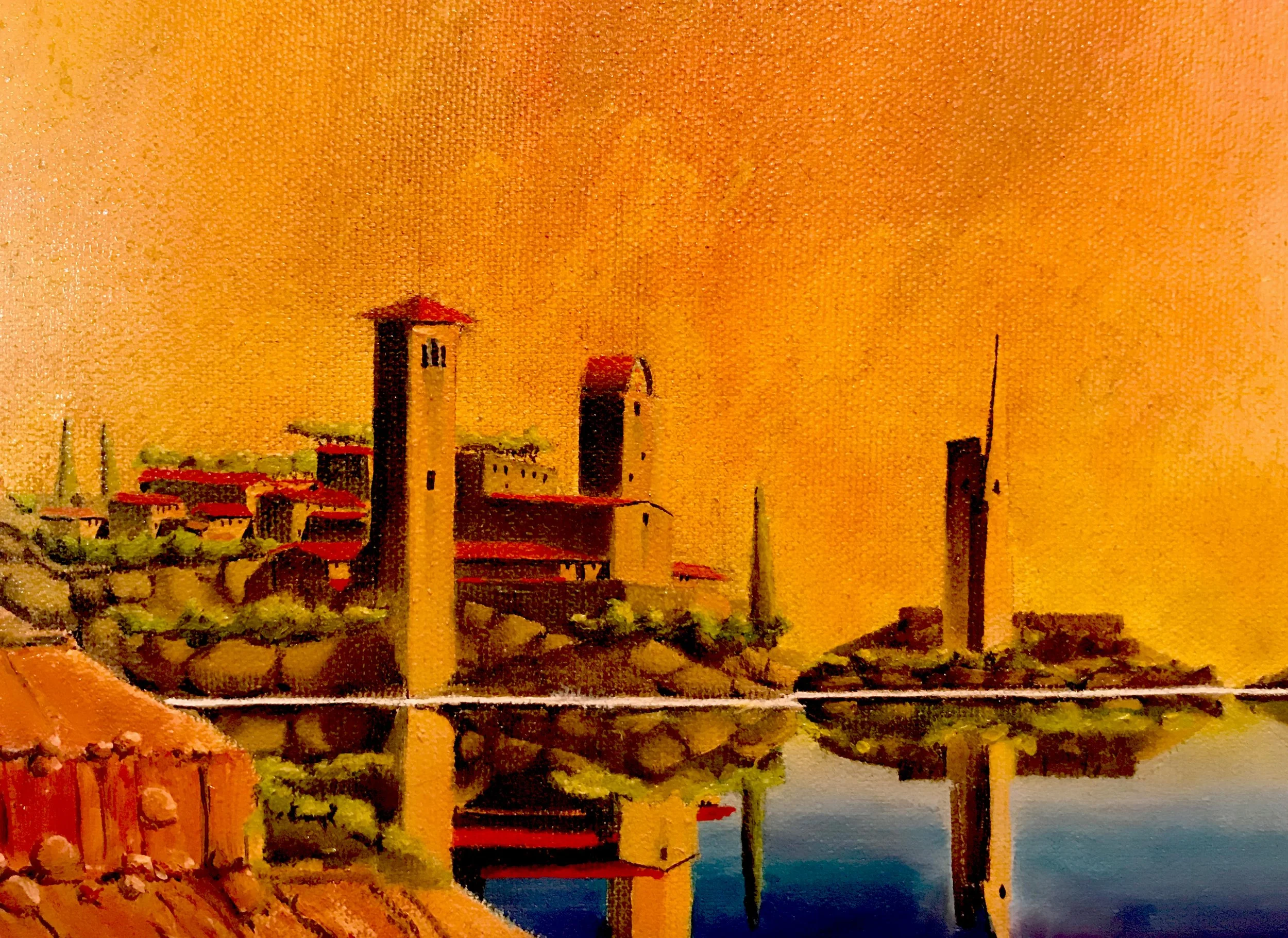
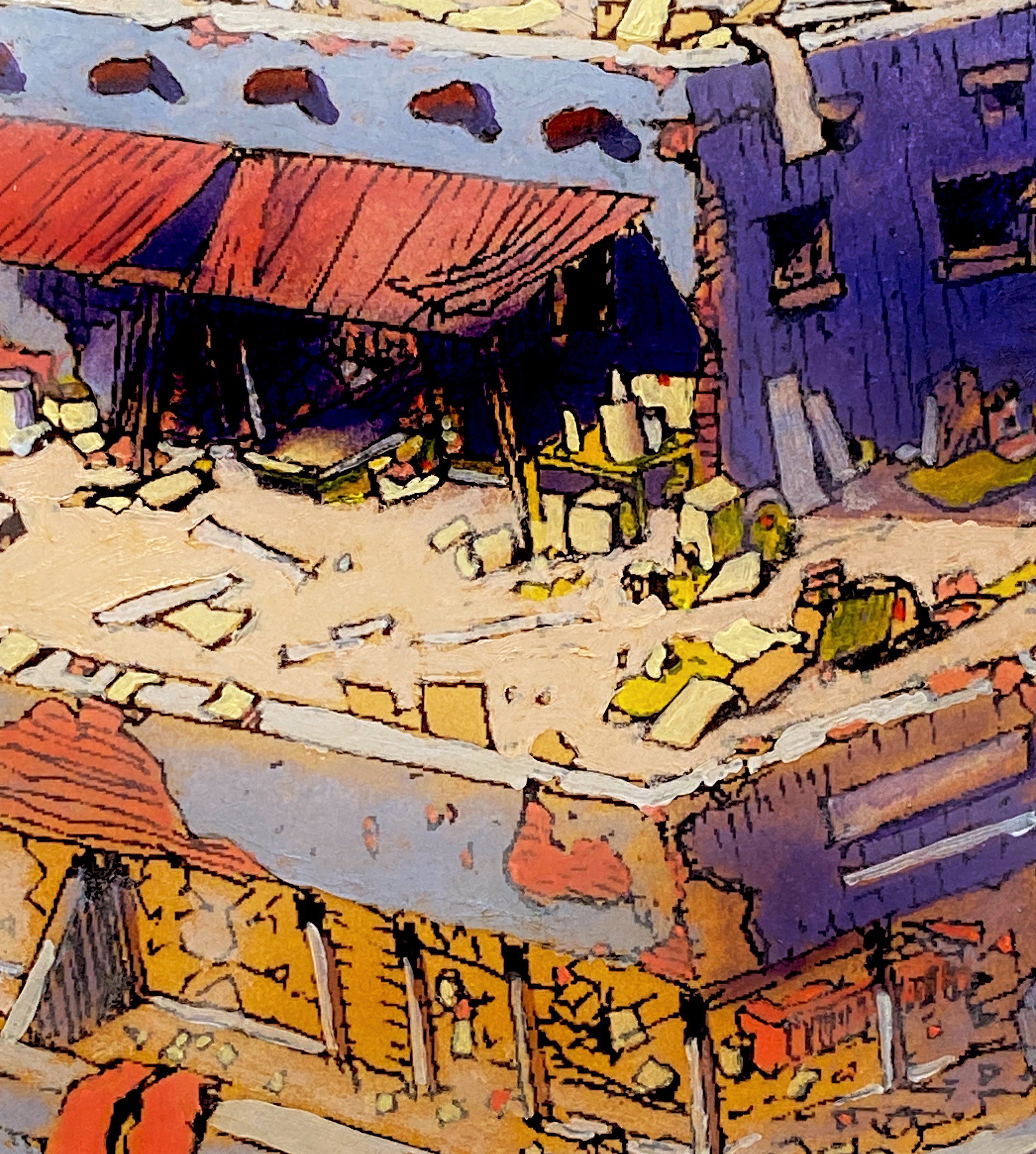
Nearing the post Anthropocene Epoch a citidal culture evoloves out of servival. While most of humanity builds upward to the stratusphere as illustrated in the Remnants of Industry, Remnants of Humanity, and Remnants of Everything Skyhigh, there remain small islets of breathable air. A Citidal Culture arises where medieval fortresses provide protection, safety and security from invading nomadic survivors.
BRASSWORKS GALLERY DECEMBER POSTCARD SHOW 2025
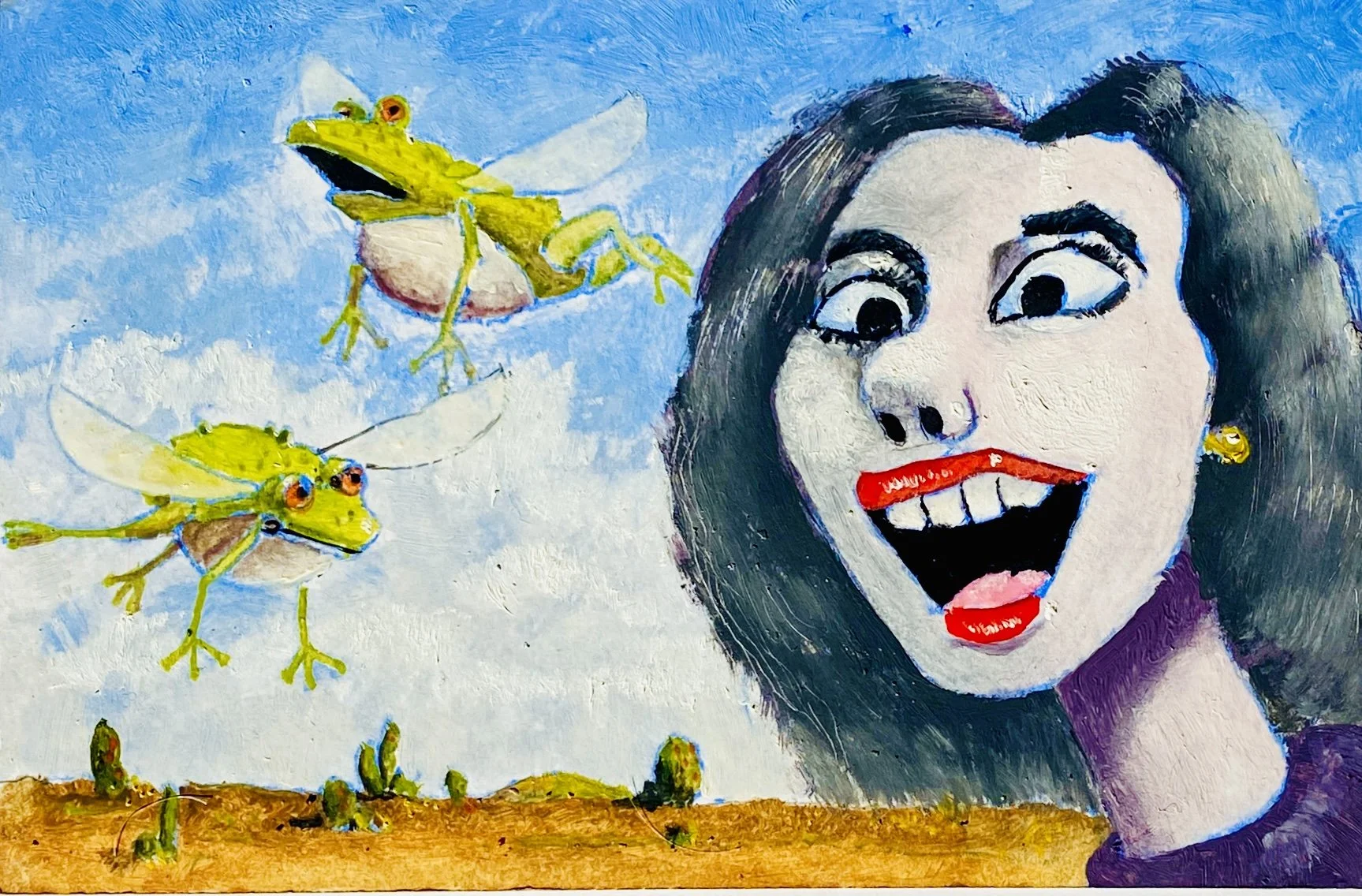
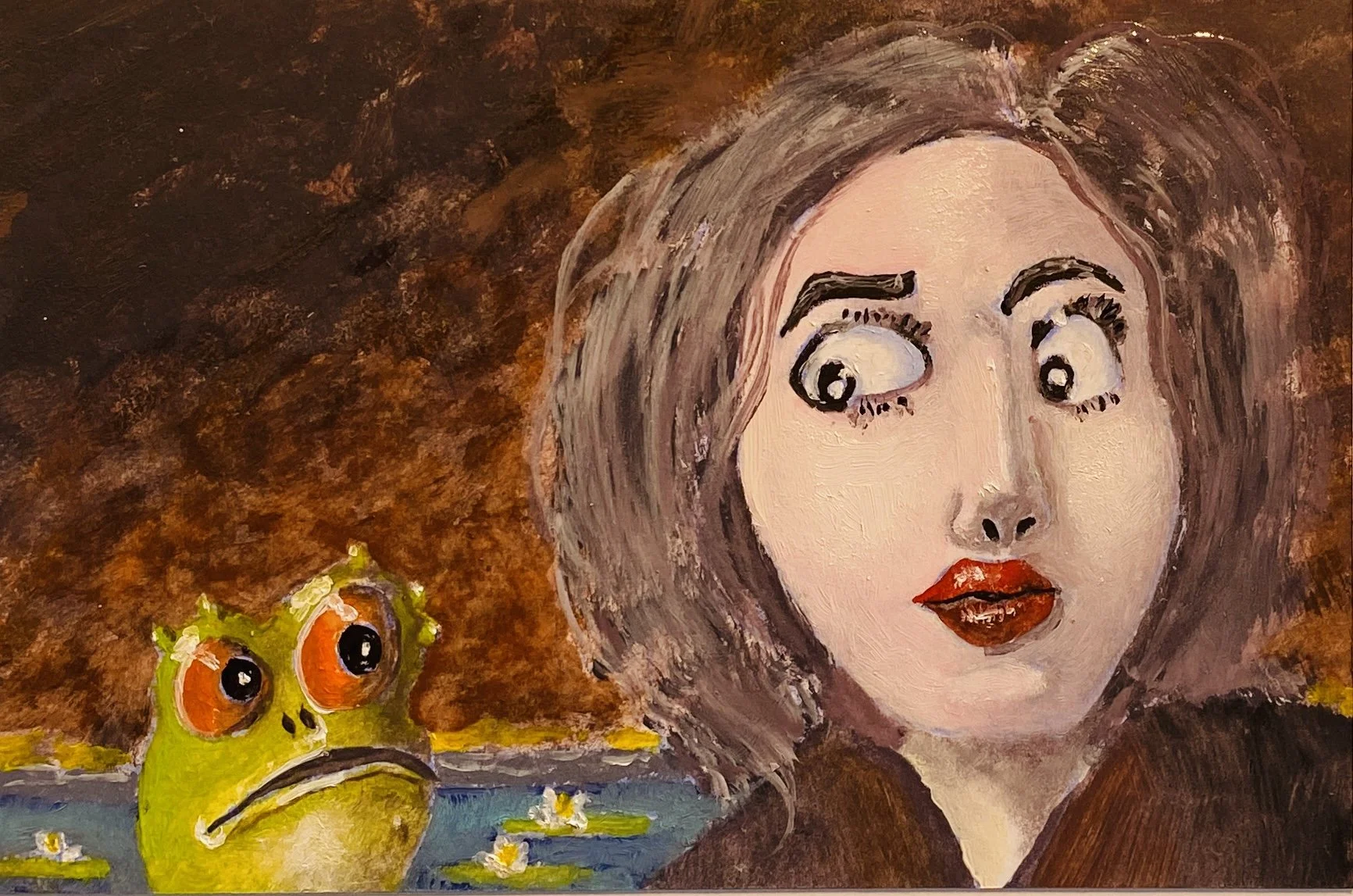
In 2024 I mebarked on figurative explorations. Cartoon Style, exagerated and simplied anatomy and geometric forms have always been part of my work. Through sketches and paintings, Cartoon Style characters help tell the ongoing stories of the ruins of humanity. R. Buckminster Fuller referred to this planet as Spaceship Earth. Our life support system has limits. We must respect those limits or perish.
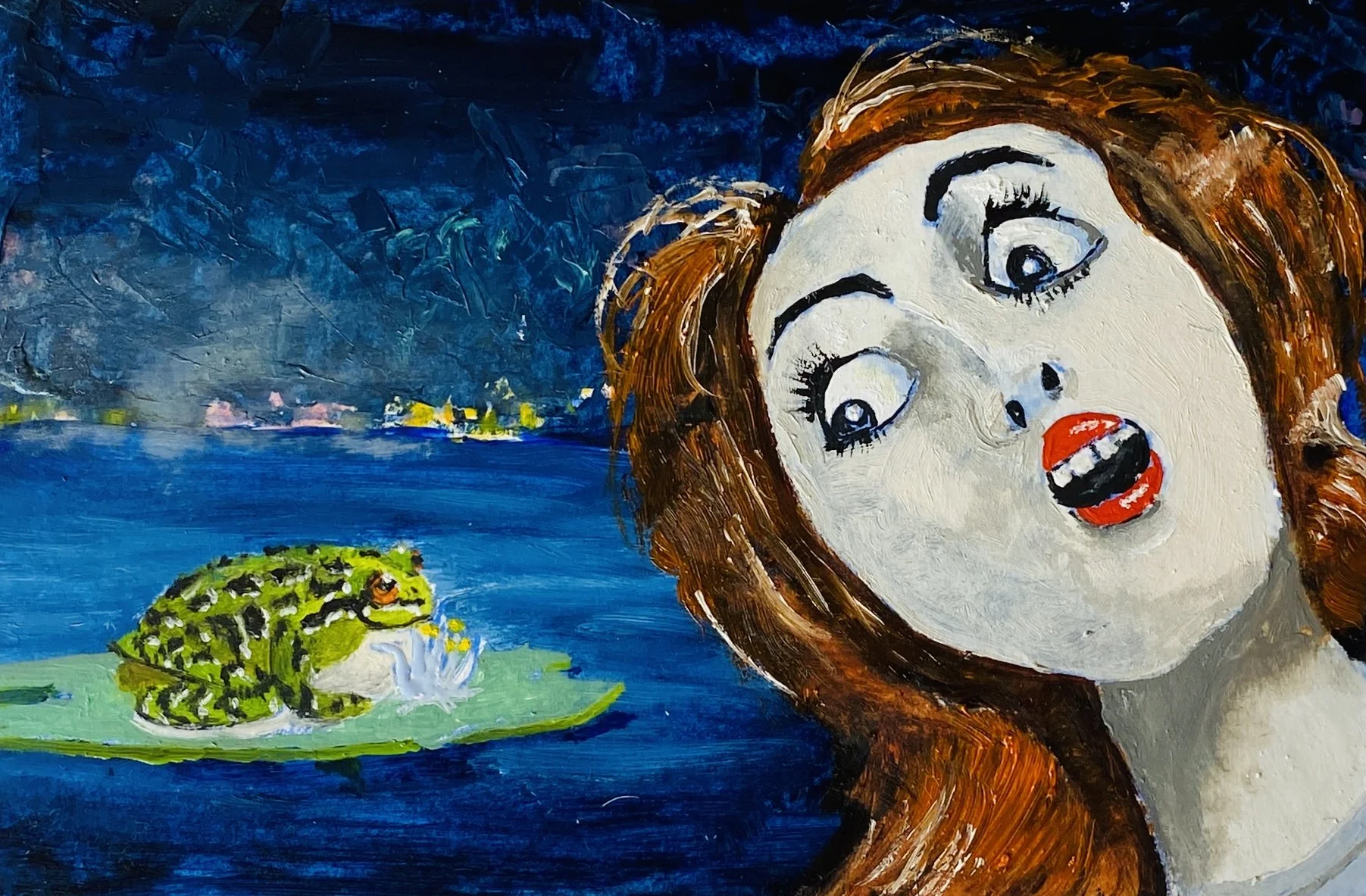
Below are 3 postcards from the Second Annual Brassworks Gallery Postcard Show in NE Portland, Oregon. This short series was based on the princess and the frog. It illustrates the risks we take for unknown outcomes. It also tells the stories about questioning our decisions. Each postcard is painted in oil with a coat of varnish for protection. brassworksgallery.com
BRASSWORKS GALLERY DECEMBER POSTCARD SHOW 2024
Below are 5 postcards from the Second Annual Brassworks Gallery Postcard Show in NE Portland, Oregon. You are looking at the evolution of a frog over 4,000 years. Each postcard is painted in oil with a coat of varnish for protection. brassworksgallery.com


BRASSWORKS GALLERY DECEMBER POSTCARD SHOW 2023


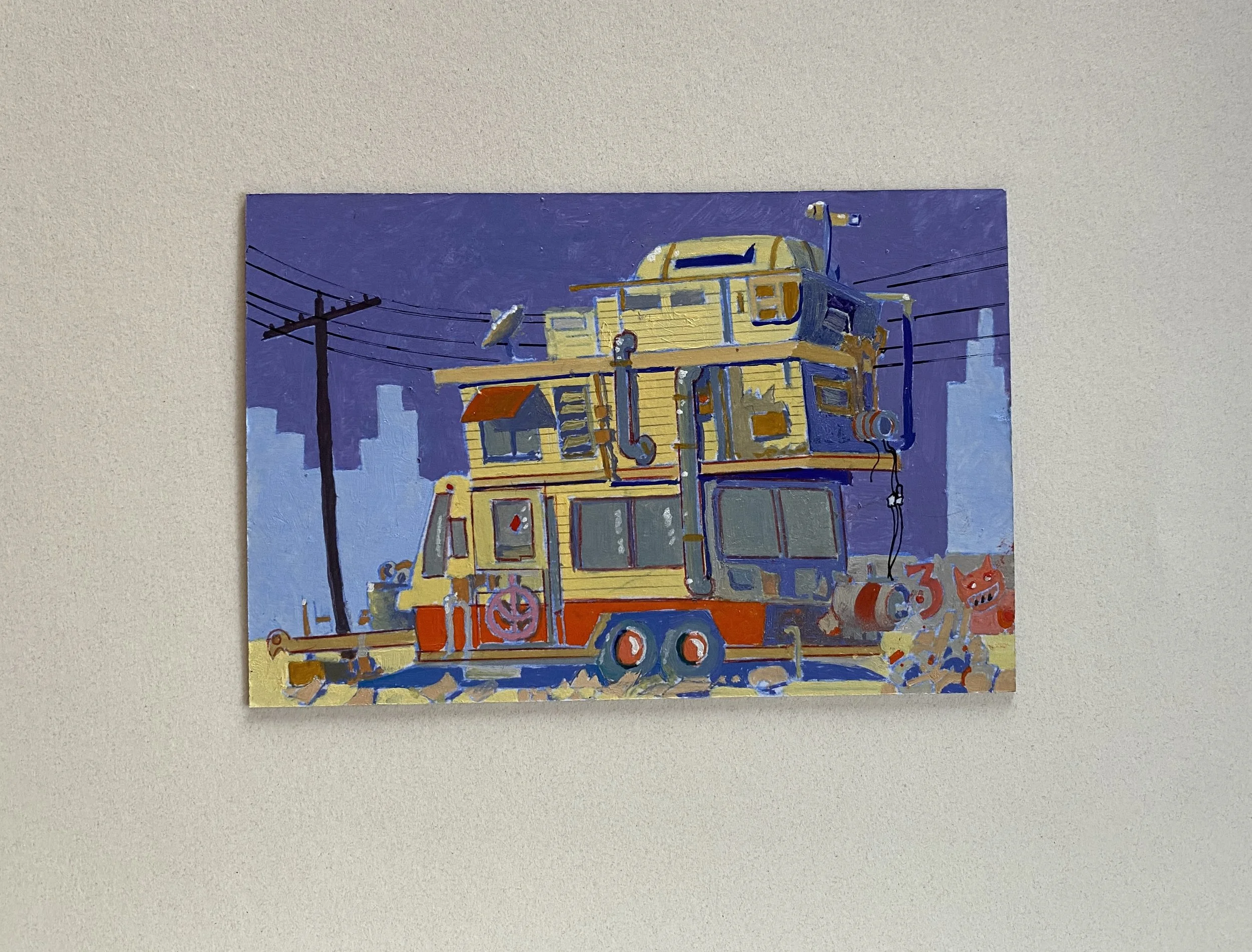


The above images are a graphic ode to the urban nomads and street people who live in the ruins of other peoples vacations. May “we” find the heart and resourses to house all Americans and provide healthcare for everyone.
EARLIER WORK
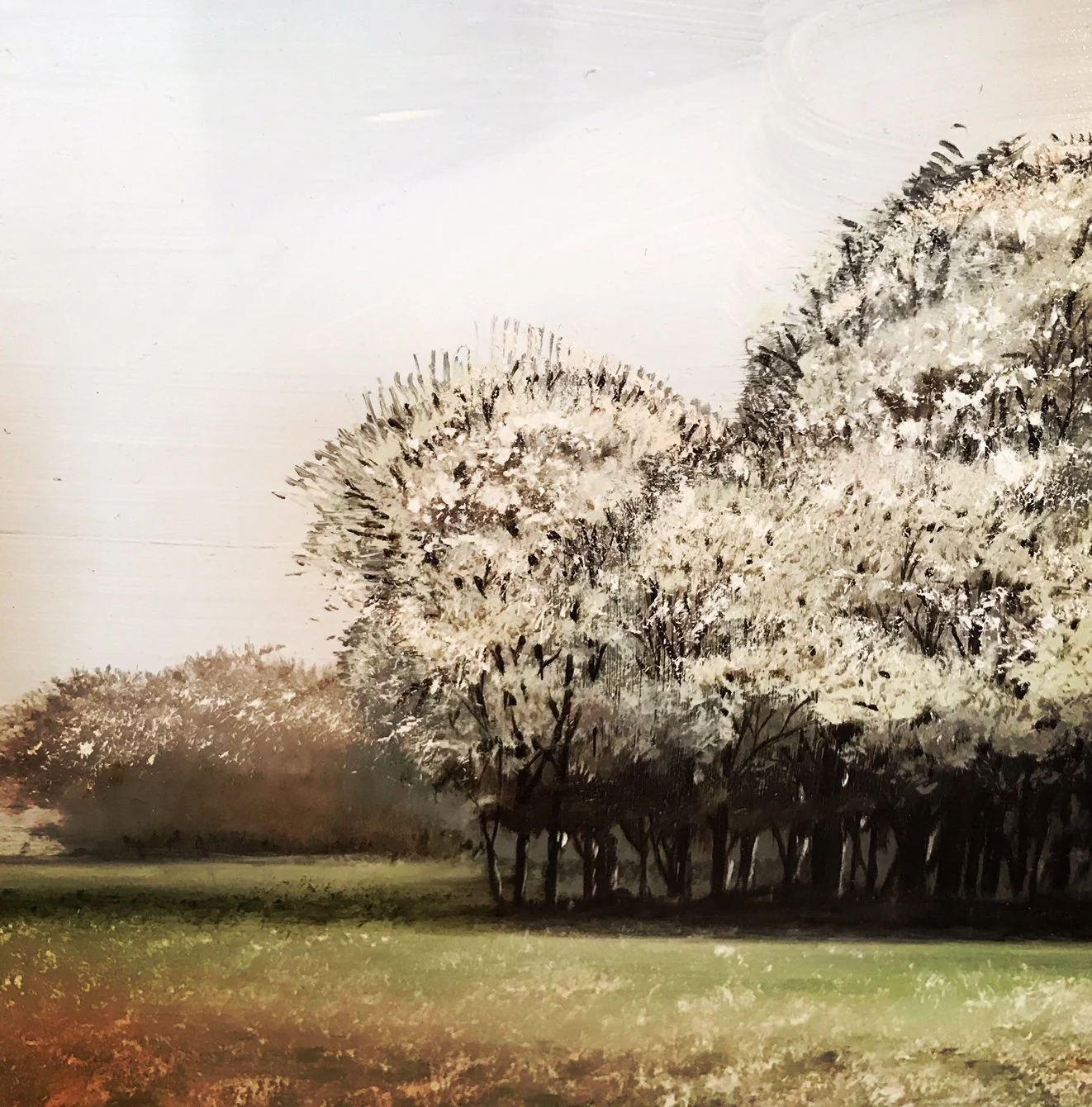
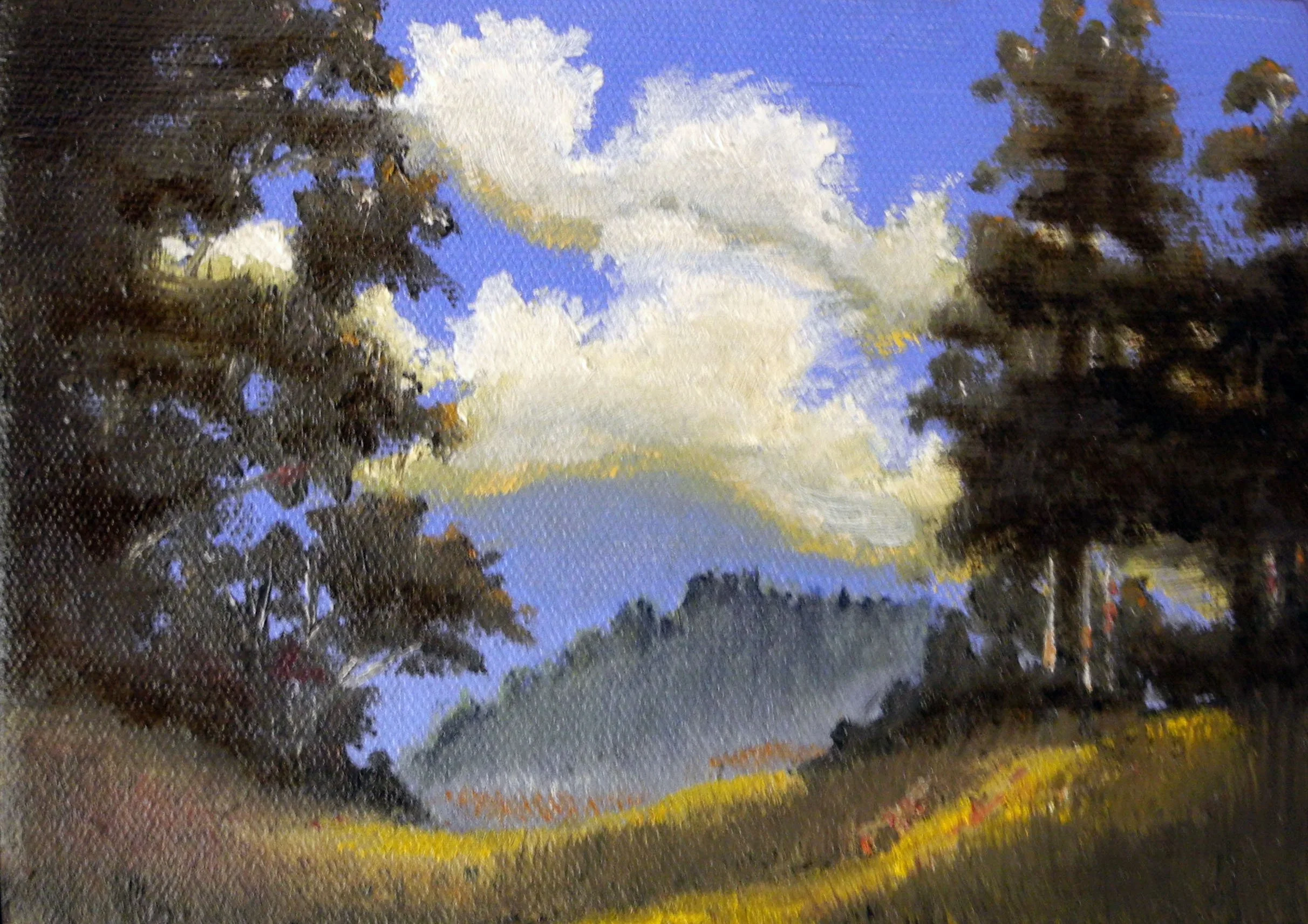
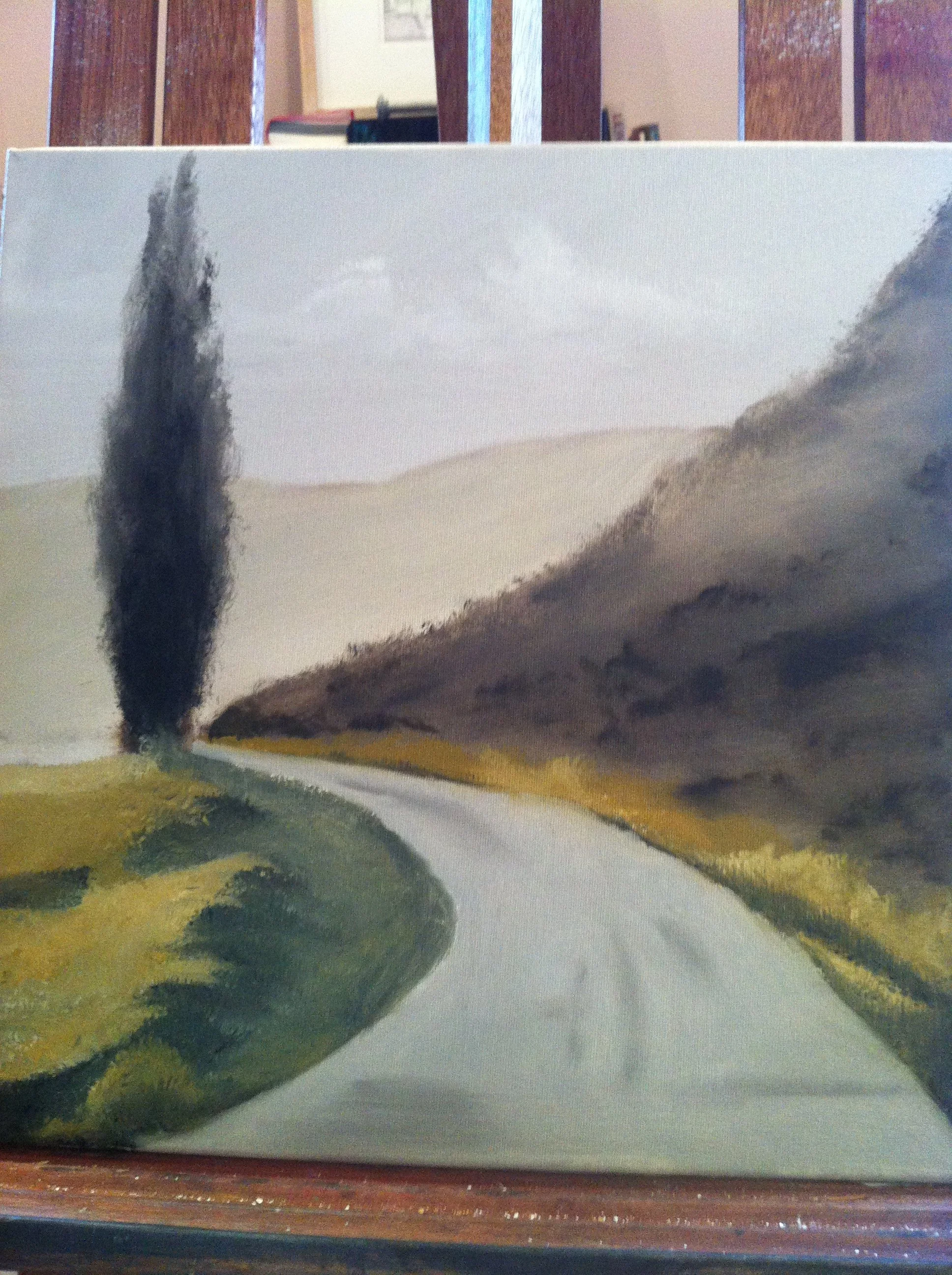
The below images show a small sample of oil landscape paintings.